Table of Contents
ToggleAn enclosed gazebo turns a backyard into a year-round destination, not just a seasonal patio. Unlike open structures that collect leaves and lose the battle to mosquitoes every June, an enclosed design offers real shelter, climate control options, and usable square footage that doesn’t depend on perfect weather. Whether someone’s planning a quiet morning coffee nook or a full outdoor room for entertaining, the right enclosure material and layout make all the difference. Here are 15+ proven designs, from traditional glass panels to modern polycarbonate, that balance protection, ventilation, and style.
Key Takeaways
- An enclosed gazebo transforms your backyard into a usable year-round destination by providing weather protection, pest control, and privacy that open structures cannot deliver.
- Glass enclosures preserve views and natural light with minimal visual obstruction, while screen-enclosed gazebos offer superior airflow and bug protection at a lower cost and weight.
- Proper ventilation is critical for all enclosed gazebo designs—include operable windows, roof vents, or strategic gaps to prevent heat buildup and condensation regardless of enclosure material.
- Polycarbonate panels provide impact-resistant durability at half the weight of glass, but require UV-coated finishes and oversized fastener holes to accommodate thermal expansion without cracking.
- Wood and lattice enclosures deliver privacy and charm while allowing ventilation, though cedar or redwood materials require regular staining and sealing to resist rot and weather damage.
- Plan electrical wiring, lighting layers, proper flooring, and gutters during the initial build phase to maximize functionality and prevent costly retrofits in your enclosed gazebo project.
Why Choose an Enclosed Gazebo for Your Backyard?
Open gazebos work fine until the first windstorm blows napkins across the yard or bugs turn a summer dinner into a swatting contest. An enclosed version solves those problems while adding serious flexibility to outdoor space.
Extended season use is the primary draw. With walls or screens in place, a gazebo becomes usable from early spring through late fall in most climates, and year-round in milder zones. Add a portable heater or ceiling fan, and the structure transitions from a hot-weather retreat to a three-season room without a full home addition.
Weather protection goes beyond rain. Enclosed panels block wind, reduce pollen intrusion, and keep furniture dry between uses. That means less maintenance, fewer cushion replacements, and no scrambling to move chairs when a storm rolls in.
Privacy and pest control rank high for anyone who’s hosted an outdoor meal. Screening keeps mosquitoes, flies, and wasps outside where they belong, while solid or frosted panels create a visual buffer from neighbors or street traffic.
From a property value standpoint, a well-built enclosed gazebo reads as finished outdoor living space, not a temporary tent or basic pergola. It’s a structure that shows up in listing photos and appeals to buyers looking for backyard entertaining options that don’t require a full deck or patio remodel.
Classic Glass-Enclosed Gazebo Designs
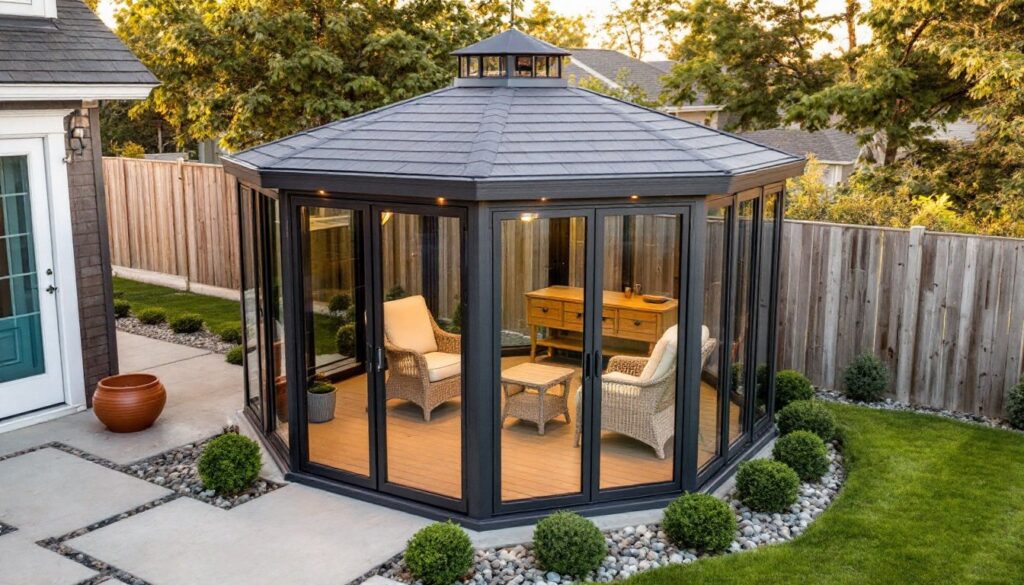
Glass enclosures deliver the most transparent experience, literal and figurative. Tempered safety glass is the standard here, rated to resist impact and shatter into pebble-sized pieces instead of jagged shards. Expect panels around ¼ inch thick for residential installations.
Floor-to-ceiling glass walls create an almost invisible barrier, ideal for properties with views worth preserving. Aluminum or vinyl framing keeps the sightlines clean, and sliding or bifold door panels allow full opening on mild days. This style works especially well for gazebos positioned near water features, gardens, or scenic backdrops.
Partial glass designs combine solid walls at seat height (around 36 inches) with glass above. This approach adds privacy for seated guests while maintaining views and natural light. It also reduces cleaning, lower glass panels pick up splashes, handprints, and dirt faster than upper sections.
Ventilation is critical with full glass enclosures. Without operable windows or doors, summer heat builds quickly. Look for casement or awning-style windows on at least two walls to cross-ventilate. Roof vents or cupolas with operable louvers help hot air escape at the peak.
Glass adds weight, so the foundation needs to handle it. A 4-inch concrete slab with rebar or a pier-and-beam system on level ground both work. Avoid gravel or paver bases for full glass designs, they settle unevenly and can stress the framing.
Screen-Enclosed Gazebos for Bug-Free Entertaining
For most climates, fiberglass screen offers the best balance of airflow and durability. Standard 18×16 mesh (18 vertical wires, 16 horizontal per square inch) blocks mosquitoes and most flies while letting breezes through. Finer mesh stops no-see-ums but cuts airflow by about 30%.
Aluminum framing keeps screen panels taut and resists rust better than steel. Look for frames powder-coated in black or bronze, they’re less visible from inside than white or silver. Pre-fabricated screen kits sized for octagonal or rectangular gazebos simplify installation, though custom frames fit irregular shapes better.
Retractable screen systems add flexibility. Motorized or manual tracks let screens roll up when bugs aren’t an issue, converting the gazebo back to an open-air structure. Brands like Phantom and Screeneze make systems that mount to existing posts, though they’re pricier than fixed panels, expect $800–$1,500 per opening depending on size.
Door options matter more than people think. Spring-loaded or magnetic closures prevent the “screen door left open” problem. For high-traffic gatherings, consider a double-door entry, it creates an airlock effect that reduces bugs sneaking in when guests enter.
Many builders frame screen panels separately from the roof structure, using 2×2 or 2×3 lumber for the screen frames and attaching them to the gazebo’s corner posts. This modular approach makes repairs easier, a torn panel swaps out in minutes instead of requiring a full rebuild. Sites like Ana White offer free plans for DIY screen frame construction.
Wood and Lattice Enclosures for Privacy and Charm
Cedar and redwood remain the go-to species for outdoor enclosures, they resist rot, repel insects naturally, and weather to a silver-gray patina without paint. Pressure-treated pine works too but requires staining or sealing every 2–3 years to prevent splitting.
Lattice panels balance privacy and ventilation. Standard 4×8-foot sheets in diagonal or square patterns install between posts with 1×2 trim holding them in place. Diagonal lattice (crisscrossed at 45 degrees) offers slightly more privacy than square, and vinyl lattice outlasts wood in wet climates.
For tighter privacy, tongue-and-groove boards create solid walls with narrow shadow lines. Running boards vertically makes the structure feel taller: horizontal boards read as more casual. Leave ¼-inch gaps between boards for drainage and expansion, wood moves with humidity changes, and tight-fit boards will buckle.
Shiplap or board-and-batten styles add farmhouse or cottage charm. Shiplap (overlapping horizontal boards) sheds water well and suits covered outdoor entertainment areas, while board-and-batten (vertical boards with narrow strips covering seams) works for modern or rustic looks.
Ventilation still applies. Even with lattice, add operable shutters or leave the top 12–18 inches of wall space open under the roofline. Hot air rises, and without an exit route, the interior turns into a sauna by mid-afternoon.
Finish matters as much as material. Exterior-grade stain penetrates wood grain and lasts longer than paint, which peels when moisture gets underneath. For a natural look, skip finish entirely on cedar or redwood and let it age, just expect more surface checking and rougher texture over time.
Modern Polycarbonate and Acrylic Enclosed Gazebos
Polycarbonate panels deliver impact resistance that’s roughly 250 times stronger than glass at half the weight. Multi-wall (twin-wall or triple-wall) panels trap air between layers, adding insulation while diffusing light to reduce glare.
For gazebo walls, 8mm twin-wall polycarbonate hits the sweet spot between cost and performance. Thicker panels (10mm or 16mm) insulate better but cut more light. Panels typically come in 4-foot or 6-foot widths and lengths up to 12 feet, secured with aluminum H-channels between posts.
UV-resistant coatings are non-negotiable. Uncoated polycarbonate yellows and becomes brittle within 2–3 years under direct sun. Quality panels carry a 10-year warranty against discoloration, check the fine print before buying.
Acrylic (often sold as Plexiglass) offers better optical clarity than polycarbonate but scratches easier and cracks under impact. It works for decorative accent panels or upper walls where impact is unlikely but visibility matters. Standard ⅛-inch or ¼-inch sheets suit most residential projects.
Corrugated polycarbonate makes sense for roofs more than walls, it sheds water efficiently and spans longer distances without support. For walls, flat panels look cleaner and seal more easily against weather.
Installation is straightforward but requires attention to thermal expansion. Polycarbonate expands and contracts with temperature swings, so drill oversized holes (about ⅛ inch larger than fasteners) and use neoprene washers to allow movement. Rigid mounting leads to cracked panels within the first year.
Ventilation remains important. Polycarbonate doesn’t breathe like screens, so plan for operable windows or leave strategic gaps at the roofline. Without airflow, condensation collects between panel layers in humid climates.
Essential Features to Include in Your Enclosed Gazebo
Electrical wiring should be part of the initial build, not an afterthought. Buried UF-B cable (rated for direct burial) runs from the house panel to the gazebo, where a weatherproof subpanel distributes circuits. Budget at least two 15-amp circuits, one for lighting, one for outlets. This work requires a permit in most jurisdictions and often an inspection.
Lighting layers make the space usable after dark. Overhead fixtures (ceiling fans with integrated lights work well) provide general illumination, while string lights or sconces add ambiance. Install dimmer switches for flexibility, bright task lighting for dining, softer levels for conversation.
Flooring takes more abuse than interior floors. Composite decking resists moisture and splinters better than wood, though it costs $3–$5 per square foot installed versus $2–$3 for pressure-treated lumber. Porcelain tile rated for outdoor use creates a finished look but requires a concrete slab base and proper slope for drainage.
For those exploring backyard hangout ideas, built-in seating maximizes usable space in smaller gazebos. Frame benches along two or three walls using 2×4 studs and 2×6 or 2×8 caps, adding hinged lids for hidden storage underneath.
Ceiling fans aren’t optional in warm climates. A 52-inch fan suits gazebos up to 12×12 feet: larger spaces need multiple units or a 60-inch model. Look for fans rated for wet or damp locations (wet for open structures, damp for enclosed).
Gutters and downspouts prevent erosion around the foundation and keep water from pooling near entries. Standard 5-inch K-style gutters handle most residential roofs. Direct downspouts into underground drains or rain barrels, don’t just dump water at the base.
Resources like Gardenista showcase how integrated planters, outdoor kitchens, and fire features elevate functionality beyond basic shelter. And for anyone building custom furniture or storage, Fix This Build That provides detailed project plans that adapt to enclosed spaces.
Conclusion
An enclosed gazebo isn’t just a backyard accessory, it’s usable square footage that extends living space without the cost or complexity of a room addition. Match the enclosure type to climate and intended use: glass for views and year-round comfort, screens for summer entertaining, wood for privacy, or polycarbonate for low-maintenance durability. Plan utilities and ventilation from the start, and the structure becomes a high-function retreat that earns its footprint.