Table of Contents
ToggleA well-designed deck does more than extend living space, it creates the foundation for everything from weeknight grilling to full-blown weekend gatherings. With material innovation, shifting building codes, and fresh design approaches reshaping the landscape in 2026, homeowners have more options than ever to build a deck that balances durability, style, and budget. Whether working from scratch or reimagining an existing structure, understanding the fundamentals of layout, material selection, and feature integration ensures the final product serves its purpose for decades. This guide walks through the planning, material, and design decisions that turn a simple platform into a thoughtfully crafted outdoor room.
Key Takeaways
- Backyard deck design requires careful planning of size and shape—a grilling station works at 10×12 feet, while entertaining spaces typically need 16×20 feet or larger.
- Material selection between natural wood, composites, and PVC directly impacts durability and maintenance; pressure-treated pine costs $2–4 per square foot while composite decking ranges from $5–12 per square foot.
- Location placement matters for drainage and usability—position decks to capture desired sun or shade, maintain 1-inch drop per 10 feet to prevent pooling, and check local setback requirements before construction.
- Built-in features like benches, integrated lighting, and pergolas elevate deck functionality without requiring a complete rebuild, with LED systems adding $15–40 per fixture.
- A hybrid DIY approach—handling decking and railing installation while hiring professionals for footings and ledger attachment—can save $3,000–5,000 in labor on mid-sized decks.
Planning Your Deck: Size, Shape, and Location Essentials
Before cutting a single board, nail down size, shape, and placement. Deck size depends on intended use: a simple grilling station runs comfortably at 10×12 feet, while a backyard entertaining setup with seating and dining zones typically requires 16×20 feet or larger. Account for furniture footprints, a standard six-seat dining table needs roughly 10×10 feet clearance, and conversation seating clusters add another 8×8 feet minimum.
Shape should respond to the home’s architecture and yard topography. Rectangular decks suit traditional homes and simplify framing with standard joists on 16-inch centers. L-shaped or wraparound designs work well on corner lots or multi-level homes, though they require additional blocking and may trigger more complex permit requirements. Multi-level decks handle slope gracefully but add structural complexity, consult local building codes, as guardrails become mandatory at 30 inches above grade in most jurisdictions per the International Residential Code (IRC).
Location matters as much as size. Position decks to capture morning sun or evening shade depending on regional climate. Avoid low-lying areas prone to water pooling, and maintain a minimum 1-inch drop per 10 feet to ensure drainage away from the home’s foundation. Check setback requirements: many municipalities require decks to sit at least 10 feet from property lines. Identify underground utilities before digging footings, call 811 for free locating services at least two business days before breaking ground.
Choosing the Right Decking Materials for Durability and Style
Material choice defines maintenance load, lifespan, and upfront cost. The decision splits between natural wood and engineered composites, each with distinct trade-offs.
Wood Decking Options
Pressure-treated pine remains the budget standard, running $2–4 per square foot for material alone. Treat it with a quality water-repellent stain every 2–3 years to prevent warping and splitting. Nominal 2×6 decking boards (actual dimensions 1.5×5.5 inches) span joists at 16-inch centers comfortably: step down to 12-inch centers for a more solid feel underfoot.
Cedar and redwood offer natural rot resistance and richer color, costing $4–8 per square foot. Both weather to silver-gray without finish: apply UV-blocking sealers annually to preserve original tones. These softer woods dent more easily than treated lumber, so avoid dragging heavy furniture across bare boards.
Tropical hardwoods like ipe, cumaru, and tigerwood deliver exceptional durability, often outlasting composite by decades, but demand specialized tools. Expect to pre-drill every fastener hole and budget $8–15 per square foot. Hardwood decking requires carbide-tipped blades and concealed fastening systems to avoid surface splitting.
Composite and Alternative Materials
Composite decking (wood fiber and plastic blend) eliminates annual staining and resists fading, mold, and insects. Entry-level products start around $5 per square foot, while capped composites with full polymer shells run $8–12 per square foot. Most manufacturers warranty against fading and staining for 25+ years, but check fine print, some exclude labor costs and fade guarantees are often limited to specific color shifts measured by Delta-E ratings.
Composites expand and contract more than wood, so follow manufacturer-specified gap requirements (typically ¼ inch end-to-end) to prevent buckling in summer heat. They also retain more heat than wood, barefoot traffic on dark composite in direct sun can be uncomfortable above 90°F.
PVC decking (100% plastic) offers the lowest maintenance and highest moisture resistance, ideal for poolside or coastal installations. It costs $10–15 per square foot and stays cooler than composite but scratches more visibly. Aluminum decking exists as a niche fireproof option in wildfire-prone zones, though higher cost ($15–20 per square foot) limits adoption.
Popular Deck Design Styles to Match Your Home’s Architecture
Deck style should echo the home’s existing lines and regional context. Forced contrast rarely works, a sleek minimalist deck attached to a Victorian farmhouse just looks confused.
Traditional platform decks pair well with ranch, colonial, and craftsman homes. Keep railing simple with square balusters on 36-inch centers or vertical cable infill for unobstructed views. Stick to warm wood tones or neutral composite grays. Picture-frame borders (perimeter boards running perpendicular to field boards) add a finished edge without fuss.
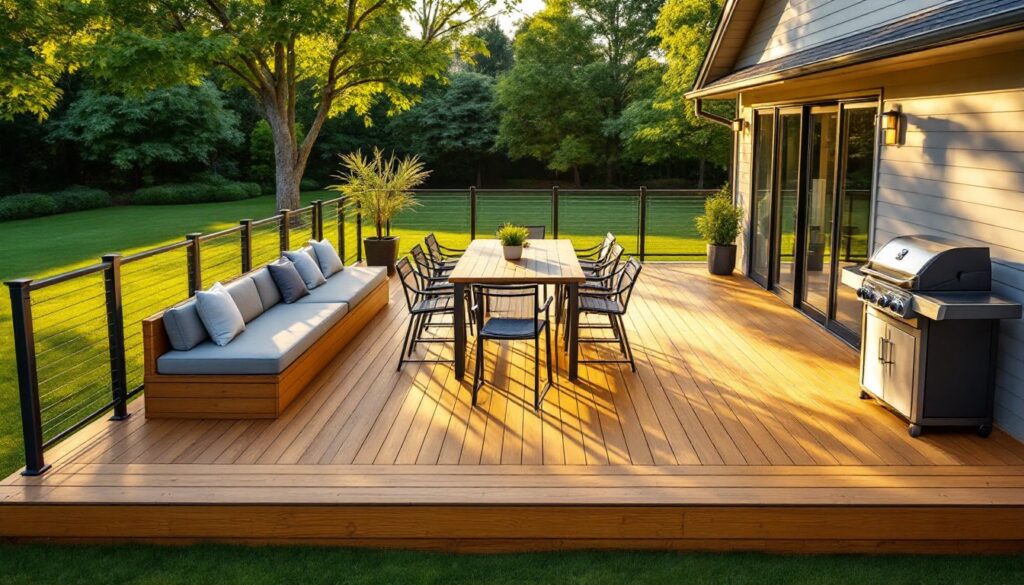
Modern horizontal designs suit contemporary and mid-century architecture. Use wide composite planks in charcoal or espresso, paired with black aluminum railings and stainless cable. Cantilever one edge slightly beyond the beam for a floating effect, consult an engineer if extending more than 24 inches, as cantilevered joists require careful load calculation.
Multi-level terraced decks work beautifully on sloped lots and complement outdoor entertaining areas by defining separate zones without walls. Step risers must meet code (typically 7–7.75 inches), and any level change over 30 inches triggers guardrail requirements. Incorporate built-in planters or benches at level transitions to soften the geometry.
Covered and pergola-topped decks extend usability in sun-heavy or rainy climates. Pergolas provide dappled shade without permit hassles in most areas: fully roofed structures often require engineering stamps and compliance with wind/snow load tables per IRC Chapter 3. A Southern Living approach integrates deep overhangs and ceiling fans for humid climates, while western designs lean on open slat roofs with retractable shade cloth.
Adding Features That Elevate Your Deck’s Functionality
Smart feature integration turns a basic deck into a true backyard hangout without requiring a complete rebuild.
Built-in seating reclaims floor space and eliminates furniture shopping. Frame benches with the same joist material as the deck structure, doubled 2×8 rim joists work well, and cap with matching decking boards. Add hinged lids for hidden storage underneath: waterproof the cavity with pond liner to protect cushions and tools. Typical bench depth runs 18–20 inches with seat height at 18 inches for comfortable sitting.
Integrated lighting extends evening use and improves safety on stairs. Low-voltage LED systems (12V or 24V) avoid NEC permitting in most jurisdictions and run off plug-in transformers. Recessed deck lights install between joists during construction: retrofit options include post-cap lights and riser-mounted step lights. Budget $15–40 per fixture and space lights every 6–8 feet along pathways and stairs.
Outdoor kitchens and bars require blocking and sometimes additional footings to support weight. A basic grill station with side counters needs 6×8 feet minimum: full kitchens with sinks and refrigerators jump to 10×12 feet and demand GFCI-protected outlets, gas lines, and water supply, all permit-required work. Countertops should be 36 inches high to match indoor kitchen standards.
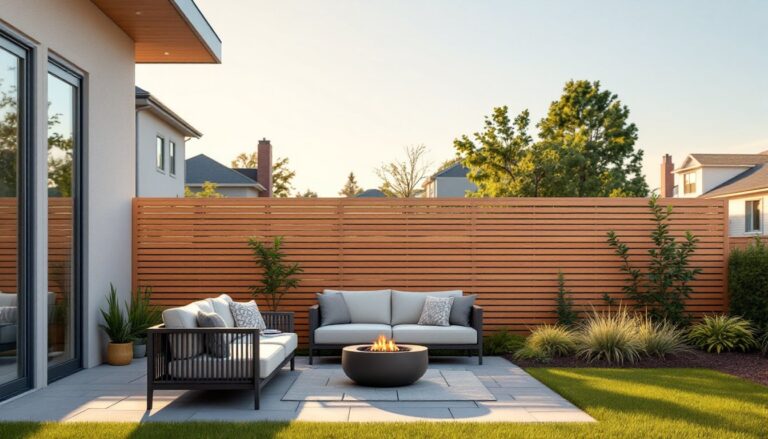
Privacy screens and planters define boundaries without solid walls. Vertical slat screens in cedar or composite provide airflow and partial screening: angle slats at 45 degrees for increased privacy. Raised planters built into railing caps or deck edges add greenery, line with heavy-duty landscape fabric and ensure drainage holes every 12 inches to prevent waterlogging. Many DIY planter plans adapt easily to deck dimensions with minor modifications.
Shade structures and pergolas reduce UV exposure and define zones. Freestanding pergolas avoid structural attachment issues: attached versions require ledger boards lagged into wall studs or band joists with ½-inch lag screws every 16 inches. Retractable awnings offer flexibility but need annual maintenance on moving parts.
Budget-Friendly Design Tips for Maximum Impact
Strategic choices stretch dollars without sacrificing quality or longevity. Start with a smaller footprint and design for future expansion, pour extra footings during initial construction to support phase-two additions. Ground-level decks (less than 30 inches high) skip railing costs and simplify permits in many areas, saving $1,500–3,000 on a typical 12×16 deck.
Mix materials intelligently: use pressure-treated lumber for framing and joists (hidden from view) and reserve premium composite or hardwood for visible decking and railings. This hybrid approach cuts material costs by 25–40% while maintaining curb appeal. Factory-second or overstock composite boards sometimes surface at 30–50% discounts, inspect for minor color variation but avoid boards with structural defects.
DIY where skills allow, sub out complexity. Homeowners comfortable with circular saws and drills can handle decking installation and railing assembly: hire pros for footings, ledger attachment, and structural framing, especially on multi-level builds. Improperly flashed ledgers cause costly water damage, this isn’t the place to learn on the job. A partial DIY approach on a 300-square-foot deck can save $3,000–5,000 in labor.
Simplify railing. Cable railing kits cost $60–100 per linear foot installed: basic wood balusters run $20–35 per foot. Horizontal boards or welded wire panels offer middle-ground pricing at $30–50 per foot and install faster than individual spindles. Check local code, some jurisdictions restrict horizontal rails due to climbability concerns near pools.
Phase features over time. Install electrical conduit and blocking for future lighting during initial construction, then add fixtures as budget allows. Build deck boxes instead of permanent storage benches in year one: upgrade to built-ins later. Prioritize structural integrity and proper flashing in the first phase, cosmetic upgrades are easy, but fixing a sagging deck or rotted rim joist costs serious money.
Source materials strategically. Lumber prices fluctuate seasonally: late fall and winter often bring lower demand and better pricing. Compare big-box stores against local lumberyards, yards sometimes beat chain pricing on volume orders and often stock higher-grade material. Don’t skimp on fasteners and flashing, stainless steel screws and peel-and-stick flashing tape add minimal cost but prevent callbacks for rust stains and water intrusion.