Table of Contents
ToggleA backyard without shade is a backyard nobody wants to use on a sunny afternoon. Umbrellas solve that problem fast, no construction, no permits, and you can move them around as the sun shifts. But picking the right umbrella isn’t just about blocking UV rays. It’s about creating a functional outdoor space that looks intentional, stands up to wind, and complements the rest of your setup. Whether you’re shading a dining set, a lounge chair, or an entire poolside deck, the umbrella you choose sets the tone. Here’s how to pick, place, and style backyard umbrellas that actually work.
Key Takeaways
- Canopy diameter is critical: a 7.5-foot market umbrella suits standard round tables, while 9-11 foot umbrellas and cantilevers up to 13 feet handle larger furniture and sectional layouts.
- Invest in quality materials like aluminum frames, fiberglass ribs, and solution-dyed acrylic fabric to ensure backyard umbrella durability through multiple seasons and resist fading from UV exposure.
- A 9-foot umbrella requires at least a 50-pound base for stability in 15-20 mph winds, while cantilever umbrellas need 75-100 pounds due to offset weight distribution.
- Cantilever umbrellas excel for irregular layouts, poolside loungers, and bar setups where a center pole would obstruct sightlines, offering 360-degree rotation and tilt functionality.
- Clustering multiple smaller 6-7.5 foot umbrellas with coordinated colors creates a flexible, boutique aesthetic perfect for conversation zones and pool decks without the bulk of a single large canopy.
- Built-in LED lighting with solar panels or rechargeable batteries extends usable hours into the evening, though quality matters—stick with reputable brands to ensure proper weatherproofing of electronics.
Why the Right Umbrella Makes All the Difference
An undersized umbrella leaves half your furniture in direct sun. An unstable one tips over in a breeze. And a flimsy canopy fades to pink by mid-July. The right umbrella does three things: it covers the zone you actually use, it stays put in typical wind conditions, and it holds up season after season.
Canopy diameter matters more than most people think. A standard 7.5-foot market umbrella covers a 36- to 48-inch round table with chairs tucked in. For a 60-inch table or sectional seating, step up to a 9- or 11-foot span. Cantilever models can cover even larger areas, up to 13 feet, without a center pole in the way.
Frame construction separates weekend umbrellas from multi-season workhorses. Aluminum frames resist rust and stay lightweight. Fiberglass ribs flex in wind gusts instead of snapping. Hardwood frames look sharp but require annual sealing to prevent splitting. Avoid thin steel on coastal properties, it corrodes fast.
Base weight is non-negotiable. A 9-foot umbrella needs at least a 50-pound base to stay upright in 15–20 mph winds. Cantilever umbrellas, with offset weight distribution, often require 75 to 100 pounds or cross-base designs filled with sand or water. Concrete pavers work in a pinch if you’re drilling through a deck, but free-standing resin or cast-iron bases are easier to reposition.
Fabric grade impacts longevity. Solution-dyed acrylic (like Sunbrella) resists fading and mildew better than polyester. Expect 1,000+ hours of UV resistance with quality acrylic versus 300–500 hours with bargain-bin fabric. If you’re near saltwater or a pool with chlorine splash, marine-grade fabric is worth the upcharge.
Classic Cantilever Umbrellas for Flexible Coverage
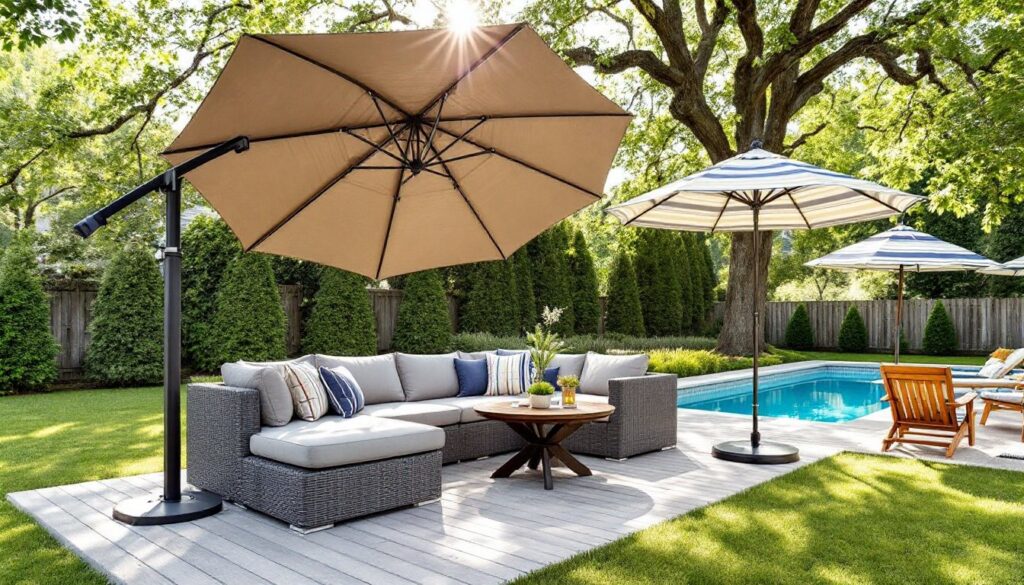
Cantilever umbrellas (also called offset or side-post umbrellas) mount the pole to the side, leaving the canopy floating over your seating area with zero obstructions. They’re ideal for covering irregular furniture layouts, L-shaped sectionals, or poolside loungers where a center pole would be in the way.
Most cantilever models rotate 360 degrees on a base pivot and tilt via a crank or foot pedal. This lets you track the sun without moving furniture. The canopy arm extends from a vertical mast, typically 8 to 10 feet tall, and the canopy itself ranges from 10 to 13 feet in diameter.
Installation requires a sturdy base or in-ground mount. Cross bases (the X-shaped kind) work on patios and decks. For permanent setups, some homeowners pour a concrete footing and use a ground sleeve. That’s overkill for most residential use, but it’s common in commercial settings or windy hillside properties.
One downside: cantilever umbrellas catch more wind than center-pole designs because of the cantilevered load. Close the canopy or tilt it vertically when you’re not around. Most come with a wind vent at the peak to reduce uplift, but that’s not a substitute for a heavy base.
For those developing a backyard entertainment area, cantilevers excel at covering bar setups, outdoor kitchens, or fire pit zones where a centered pole would block sightlines or traffic flow.
Market Umbrellas for Timeless Patio Charm
Market umbrellas are the center-pole workhorses you see at sidewalk cafés and backyard dining tables. They’re simple, affordable, and built to slip through a table’s umbrella hole or into a standalone base.
Standard sizes run from 6 feet (bistro sets) to 11 feet (large dining tables). An 8- or 9-foot model suits most residential setups. Canopy shapes come in round, square, or rectangular. Rectangular canopies (6×9 or 8×10 feet) work well over oblong tables, covering more length without excess width.
Most market umbrellas use a crank lift or push-up mechanism. Crank systems are easier on the back and allow precise height adjustments. Push-up models are cheaper but harder to operate once the canopy gets wet and heavy. Some higher-end versions add a tilt function, usually a collar or button that lets you angle the canopy without moving the base.
Because the pole runs through the center, market umbrellas need either a table with a pre-drilled hole or a freestanding base. If you’re using a base, match the pole diameter: most residential umbrellas have 1.5-inch or 1.9-inch poles. Adapters exist, but a snug fit is safer.
For stability, pair a 9-foot market umbrella with a 50- to 60-pound base. Cast iron and steel bases last longer than hollow plastic ones filled with water (which crack in freezing temps). Concrete-filled resin bases split the difference, durable and movable.
Market umbrellas shine in outdoor entertaining setups where the table is the focal point and you want a clean, classic look that doesn’t dominate the space.
Create a Cozy Corner with Multiple Small Umbrellas
Instead of one large umbrella, some layouts benefit from clustering two or three smaller umbrellas, especially when covering lounge chairs, daybeds, or scattered seating zones that don’t align in a single row.
Use 6- or 7.5-foot market umbrellas on individual bases, spaced to overlap slightly at the edges. This approach works well on pool decks, where chaise lounges sit at angles, or in a backyard outdoor entertaining area with conversation clusters separated by planters or low walls.
Color coordination matters here. Matching canopy colors create a cohesive look. Alternating two complementary tones (navy and white, or terracotta and cream) adds visual rhythm without chaos. Avoid more than two colors unless you’re going for a festival vibe.
Smaller umbrellas also cost less per unit and are easier to store in winter. Bases can be 30 to 40 pounds each since the canopy diameter is smaller and wind load is lower. Rolling bases make repositioning simple as the sun moves or as you reconfigure seating for a party.
One trade-off: more umbrellas mean more crank handles to turn and more bases to secure. If you’re in a high-wind area, this setup requires diligence. But for flexibility and a layered, boutique-resort aesthetic, it’s tough to beat.
Upgrade Your Space with Built-In Lighting Features
Umbrellas with integrated LED lighting extend usable hours into the evening without stringing separate bulbs or running extension cords. Most systems use solar panels mounted on top of the canopy or battery packs tucked into the pole.
Solar-powered LED ribs are the most common design. Small panels charge during the day, and LEDs embedded in the umbrella’s ribs or along the underside of the canopy turn on at dusk. Brightness varies, budget models offer dim accent lighting, while higher-end versions (often with 24 or 32 LEDs) provide enough light for reading or dining.
Battery-powered umbrellas with rechargeable packs give you more control over brightness and timing, but you’ll need to swap or recharge batteries every few weeks depending on use. Some models include remote controls or timers.
Placement tip: if your umbrella lights double as task lighting for a dining table, position the umbrella so the LEDs shine down, not out toward seating. Glare from side-mounted lights can be harsh.
For entertainment backyard ideas that include evening gatherings, built-in lighting eliminates the need for freestanding torches or string lights, though combining soft ambient lighting with umbrella LEDs creates the best layered effect.
Keep in mind that while lighted umbrellas are convenient, they add weight and complexity. Solar panels and battery housings can interfere with smooth canopy operation if poorly integrated. Stick with reputable brands that weatherproof the electronics.
Matching Your Umbrella to Your Outdoor Decor Style
An umbrella is one of the largest visual elements in a backyard, so it should tie into your overall design, not fight it.
For modern or minimalist spaces, go with solid neutrals: charcoal, white, or taupe canopies on matte black or brushed aluminum frames. Clean lines and monochrome palettes keep the focus on furniture and architecture. Cantilever umbrellas with sleek, geometric bases fit this aesthetic well.
Coastal or tropical themes call for lighter tones, sand, seafoam, or navy, with natural wood poles or bamboo-look finishes. Sunbrella’s marine-grade fabrics hold up to salt spray and UV without fading. Pair with teak or weathered wood furniture for a cohesive beachy vibe, as seen in many covered outdoor entertainment areas.
Traditional or farmhouse styles lean toward market umbrellas in classic stripes or earth tones, hunter green, burgundy, or natural canvas. Wooden poles (especially hardwoods like eucalyptus) add warmth. If you’re working with vintage metal patio furniture, a striped canopy in complementary colors ties everything together.
Bold, eclectic setups can handle patterned canopies, florals, geometric prints, or color-blocked panels. Just keep the rest of your outdoor textiles (cushions, rugs) more subdued so the space doesn’t feel cluttered. According to design experts who specialize in shade structures, mixing patterns works best when you vary the scale, pair a large umbrella print with smaller-scale cushion patterns.
Practical note: darker canopies absorb more heat but hide dirt and pollen better than white or cream. Lighter colors reflect heat and feel cooler underneath but show stains and require more frequent cleaning. If you have deciduous trees overhead, expect to hose down your canopy monthly during leaf drop and pollen season.
When planning a backyard wedding setup, umbrellas can double as decor anchors, wrap the poles in string lights or fabric, or hang lightweight florals from the ribs for a soft, romantic canopy effect.
Conclusion
A well-chosen umbrella does more than block the sun, it defines how you use your backyard. Whether it’s a cantilever shading a poolside bar, a market umbrella over the dining table, or a cluster of small ones creating flexible lounge zones, the right setup makes outdoor space usable all season. Focus on canopy size, frame durability, and a base heavy enough to stay put. Everything else, color, lighting, style, comes after function.