Table of Contents
ToggleNosy neighbors, street traffic, and overlooking windows can turn a peaceful backyard into a goldfish bowl. Privacy screens solve that problem while adding structure, style, and value to outdoor spaces. Whether someone’s dealing with a cookie-cutter subdivision lot or a city townhouse with zero setback, the right screen transforms an exposed yard into a private retreat. From fast-growing hedges to weekend-built wood frames, these solutions range from dead-simple to moderately challenging, but all deliver real privacy without requiring a masonry crew or a second mortgage.
Key Takeaways
- Privacy screens reduce noise pollution and create usable outdoor zones while increasing property value through intentional landscaping that makes buyers perceive extended living space.
- Fast-growing hedges like Leyland cypress and Green Giant arborvitae reach 15–20 feet in five years when planted 5–6 feet apart, offering year-round privacy without the cost of masonry walls.
- A basic DIY wood-frame privacy screen with lattice or slat infill is a two-day weekend project using 4×4 pressure-treated posts set 24–30 inches deep in concrete and secured with 3-inch exterior-grade screws.
- Budget-friendly backyard privacy screen ideas include bamboo roll fencing ($30–$60), pallet wood panels, large ornamental grass planters, and outdoor fabric screens that provide temporary or flexible solutions for renters.
- Layering multiple screening elements—combining permanent hedges with movable structures, living walls, or cable rail systems with climbing vines—delivers superior visual interest and privacy compared to single-solution approaches.
- Check local zoning ordinances and HOA requirements before installing any privacy screen taller than 6 feet to avoid costly do-overs or removal orders.
Why Your Backyard Needs a Privacy Screen
Privacy screens do more than block sight lines. They reduce noise pollution from traffic and neighbors, create windbreaks that make patios usable on breezy days, and establish clear property boundaries without the permanence of masonry walls. In urban and suburban lots where homes sit 10–15 feet apart, screens turn unusable side yards into functional zones.
From a property value standpoint, mature landscaping and well-built structures consistently rank high with buyers. A thoughtfully designed screen signals that the outdoor space has been intentionally developed, not just mowed and forgotten. It also extends living space, homeowners are far more likely to use a patio or deck when it doesn’t feel like performing for an audience.
Before installing any screen taller than 6 feet, check local zoning ordinances. Most jurisdictions regulate fence height, setback from property lines, and materials. Some HOAs require architectural approval even for plantings. A quick call to the local building department prevents expensive do-overs.
Natural Privacy Screen Solutions
Living Walls and Vertical Gardens
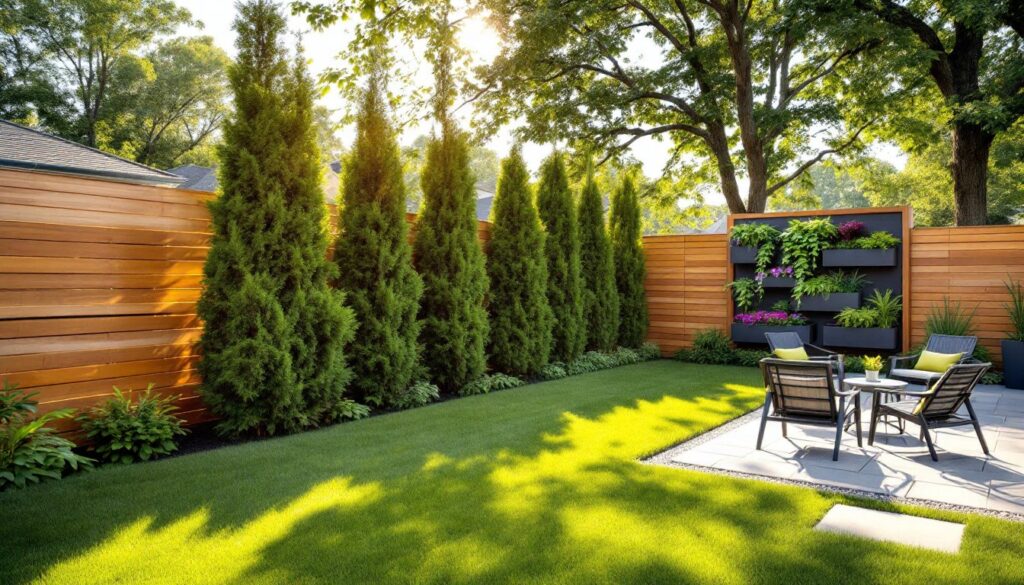
Living walls pack serious privacy into minimal square footage, ideal for narrow side yards or small patios. The simplest version uses modular planter panels mounted to fence posts or a freestanding frame. Fill them with trailing vines like pothos or jasmine, or go edible with strawberries and herbs.
Water delivery is the main challenge. Drip irrigation systems designed for vertical gardens cost $100–$200 and connect to standard hose bibs. Without irrigation, hand-watering twice daily in summer becomes a chore. For shaded areas, ferns and hostas work well: full-sun walls need drought-tolerant sedums or succulents.
Framing requires rot-resistant lumber, cedar 2x4s or pressure-treated pine rated for ground contact. Mount the frame to existing fence posts with 3-inch galvanized lag screws, or sink new 4×4 posts 24 inches deep in fast-setting concrete. Space planter panels 12–16 inches apart for adequate root growth. Homeowners planning a backyard entertaining space often use living walls to define zones without blocking airflow.
Fast-Growing Privacy Plants and Hedges
Nothing beats a well-established hedge for year-round privacy, but patience isn’t everyone’s strong suit. Leyland cypress and Green Giant arborvese grow 3–5 feet per year in USDA zones 5–9, reaching 15–20 feet in five years. Plant them 5–6 feet apart for a solid screen. They need full sun and well-drained soil, poor drainage kills them fast.
For a less formal look, Nellie Stevens holly offers glossy evergreen leaves and red berries, growing 2–3 feet annually. It tolerates partial shade and clay soil better than most evergreens. In warmer zones (8–10), Podocarpus (yew pine) delivers a dense, tropical screen with minimal maintenance.
Deciduous options like hornbeam or beech grow slower but offer architectural structure even in winter when bare. Bamboo grows fastest of all, some clump varieties add 5 feet per season, but requires rhizome barriers buried 24–30 inches deep to prevent invasive spreading. Skip the barrier, and bamboo will colonize the neighbor’s yard within three years.
Amend planting holes with compost, but don’t overdo it, native soil should make up at least 50% of backfill. Water deeply twice per week for the first season, then scale back as roots establish.
DIY Privacy Screen Projects You Can Build This Weekend
A basic wood-frame screen with lattice or slat infill is a solid two-day project for anyone comfortable with a circular saw and drill. Start with 4×4 pressure-treated posts set 24–30 inches deep in concrete, spaced 6–8 feet on center. Use a post level to ensure plumb in both directions before the concrete sets, this step can’t be fudged.
For the frame, 2×4 cedar or pressure-treated rails connect posts at top, bottom, and mid-span. Secure them with 3-inch exterior-grade screws (not nails, screens catch wind load and nails pull out). Infill options include:
- Lattice panels (4×8 sheets, $25–$40): fast, inexpensive, and offer partial privacy. They’re flimsy, so reinforce with a 2×2 trim frame.
- Horizontal slats (1×4 or 1×6 cedar): space them 1–2 inches apart for a modern look. A 6-foot-tall screen needs roughly 40 linear feet of slat material per 8-foot section.
- Corrugated metal or polycarbonate panels: durable, weather-proof, and give an industrial vibe. Use rubber washers under screw heads to prevent leaks.
Finish cedar with a clear exterior sealant to preserve natural color, or let it weather to silver-gray. Pressure-treated lumber turns green without stain: a solid exterior stain in charcoal or espresso looks sharp and hides the chemical tint. Reapply every 2–3 years.
Safety note: Wear eye protection when cutting treated lumber, and a dust mask, the chemical preservatives are no joke. Don’t burn scrap treated wood: dispose of it as construction waste.
Modern Privacy Screen Designs for Contemporary Yards
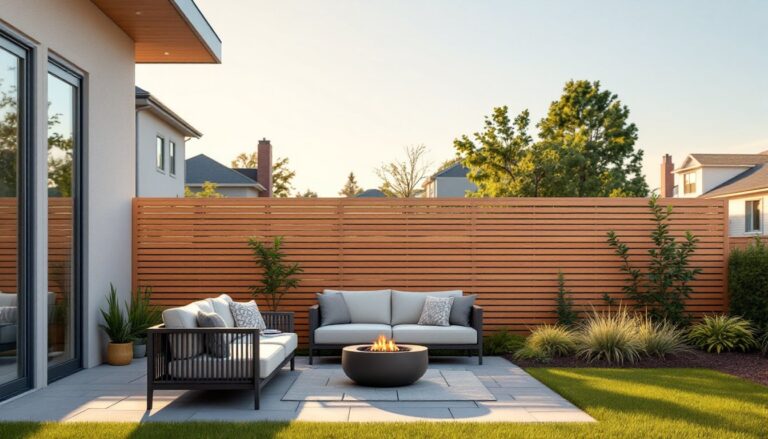
Clean lines and mixed materials define modern screens. Horizontal slat designs, thin boards with uniform gaps, dominate contemporary landscapes. For DIYers, 1×2 cedar slats spaced 1 inch apart on a steel frame deliver that high-end look. Steel tube frames (1.5-inch square tubing) outlast wood posts but require welding or ordering a custom kit online.
Another trending option: laser-cut metal panels in geometric or organic patterns. These range from $150–$400 per 4×8 panel depending on complexity. Mount them between wood or steel posts for a statement piece that doubles as outdoor art. Powder-coated aluminum won’t rust and needs zero maintenance.
For a softer modern take, slatted composite decking boards work as infill. They won’t rot, splinter, or need staining, perfect for low-maintenance yards. Brands like Trex or TimberTech cost $2–$4 per linear foot but last 25+ years. A contemporary entertainment area pairs well with these materials.
Cable rail systems offer privacy when combined with climbing vines. Install stainless steel cables horizontally, spaced 3–4 inches apart, then train clematis, wisteria, or hops along them. The structure stays sleek while plants fill in over one to two growing seasons. Use a cable tensioning tool to keep lines taut, saggy cables look sloppy and won’t support vine weight.
Budget-Friendly Privacy Screen Options
Not every project needs treated lumber and lag screws. Bamboo roll fencing (4×8 rolls, $30–$60) zip-ties to existing chain-link or picket fences in under an hour. It lasts 3–5 years before UV exposure breaks it down, not permanent, but effective for renters or temporary solutions.
Outdoor fabric privacy screens stretch between posts or trees using grommets and galvanized wire. UV-resistant polyester fabrics rated for outdoor use cost $15–$25 per 6×10 panel. They work great for defining a cozy hangout zone without heavy construction. Take them down in winter to extend lifespan.
Pallet wood is free or cheap ($5–$15 per pallet) and works surprisingly well for rustic screens. Disassemble pallets, sand boards smooth, and rebuild as vertical or horizontal slat panels. Not all pallets are safe, look for the HT stamp (heat-treated), and avoid MB (methyl bromide, a toxic fumigant). Pallet wood is rough-sawn and inconsistent, but that’s part of the charm. Seal it with exterior stain to prevent splinters and rot.
Large outdoor planters (24–30 inches tall) filled with ornamental grasses create movable privacy. Varieties like maiden grass or feather reed grass grow 5–7 feet tall and stay upright through winter. Planters allow renters to take their privacy with them and give homeowners flexibility to rearrange layouts. Use lightweight resin planters to keep them portable, and mulch heavily to retain moisture.
According to design experts at Gardenista, layering screening elements, mixing plants with built structures, delivers better visual interest and privacy than relying on a single solution. Many successful outdoor entertaining setups use a combination of permanent hedges and movable screens to adapt the space for different events.
Reclaimed doors or shutters, mounted side-by-side on a simple frame, bring vintage character at salvage-yard prices ($20–$50 per door). Paint them a cohesive color, or leave mismatched for an eclectic look. Hinges allow fold-flat storage in the off-season. Repurposed materials require more creativity than cookie-cutter kits, but the results feel one-of-a-kind.
For those seeking inspiration on creating a welcoming outdoor space, lifestyle sources like Southern Living showcase regional approaches to privacy that balance function with curb appeal. Combining privacy solutions with thoughtful layouts can turn even compact yards into inviting retreats perfect for memorable gatherings.