Table of Contents
ToggleCreating a Japanese garden isn’t about replicating Kyoto in your backyard, it’s about borrowing principles that have worked for centuries: asymmetry, natural materials, and intentional restraint. These gardens succeed because they strip away clutter and emphasize what matters: texture, flow, and quiet spaces that make you want to sit down and breathe. Whether working with a compact patio or a quarter-acre lot, the same design language applies. The projects below range from afternoon builds to weekend commitments, with options for different skill levels and budgets.
Key Takeaways
- Backyard Japanese garden ideas thrive on three core principles—asymmetry, natural materials, and intentional restraint—rather than replicating formal landscapes.
- Define separate zones using low fencing or bamboo screens, and control pace with stepping stones spaced 18-24 inches apart to guide visitors through the garden gradually.
- Focus on evergreens and foliage texture, especially Japanese maples and clumping bamboo varieties, since year-round structure matters more than seasonal flowering plants.
- Water features like simple tsukubai basins and DIY bamboo fountains deliver serenity within a small footprint and require minimal technical expertise or investment.
- Build stone pathways and rock groupings following odd-number arrangements (three, five, or seven stones) with one-third of each stone buried to create an embedded, natural appearance.
- Start with hardscape and structural elements, then add ornaments and refinements over time—Japanese garden design rewards patience and weathering over quick completion or expensive materials.
Essential Elements of a Japanese Garden Design
Japanese garden design rests on three core principles: ma (negative space), wabi-sabi (embracing imperfection), and borrowed scenery that integrates the surrounding landscape. Forget symmetry, these gardens use odd-numbered groupings and asymmetrical layouts to create visual interest without formality.
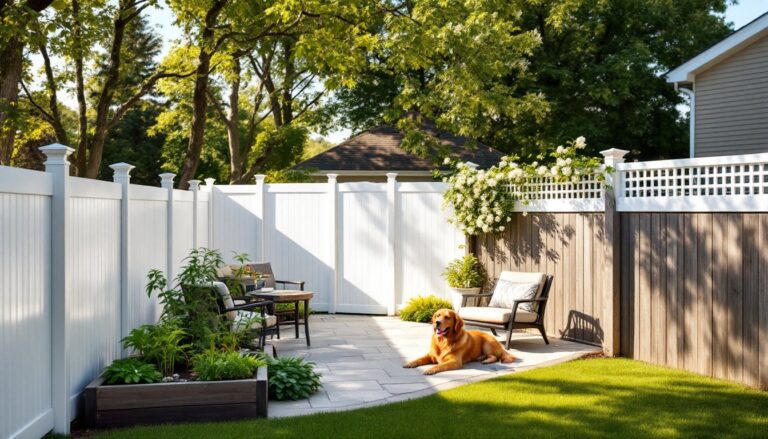
Start by defining zones. Use low fencing, bamboo screens, or evergreen hedges to create separate “rooms” within the garden. Each area should reveal itself gradually, not all at once. A 4-foot bamboo fence or a line of boxwoods work equally well and keep installation straightforward.
Gravel or decomposed granite serves as the primary ground cover in many traditional gardens. Plan for a 2-3 inch depth over landscape fabric to suppress weeds. Decomposed granite compacts better for pathways: pea gravel (3/8-inch) works for areas around plantings. Both drain well and provide the neutral backdrop that lets other elements stand out.
Pruning discipline matters more than plant selection. Japanese gardens rely on controlled growth, think cloud-pruned pines and sculpted azaleas, not sprawling shrubs. If you’re not ready to commit to that level of maintenance, stick with naturally compact varieties and plan on seasonal trimming rather than weekly clipping.
Keep hardscape materials consistent. Pick one stone type for both pathways and accents. Mixing flagstone, river rock, and lava rock in the same sightline creates visual noise. Local stone often costs less and weathers better than imports.
Water Features That Bring Serenity to Your Space
Water doesn’t need to be elaborate. A tsukubai (stone water basin) with a bamboo spout delivers sound and function in a 3-foot footprint. These traditionally sit low to the ground, 12 to 18 inches tall, and require a small recirculating pump (50-100 GPH is sufficient). Plumb it with 1/2-inch vinyl tubing buried in a gravel bed, and use a GFCI-protected outlet within 6 feet.
For larger spaces, consider a pond with a gently sloping profile rather than steep sides. Aim for at least 18 inches of depth if adding koi: shallower ponds work fine for aquatic plants alone. Garden design experts emphasize the importance of integrating water features with stone edging to create natural transitions. Line the pond with 45-mil EPDM rubber liner, and edge it with flat stones that overhang by 2-3 inches to hide the liner and create shadow lines.
Bamboo water spouts (shishi-odoshi or deer scarers) add movement and rhythm. They’re DIY-friendly if you source 2-inch diameter bamboo culms and a pivot pin setup. Balance the filled bamboo spout so it tips and strikes a stone every 20-30 seconds. It’s more sculpture than fountain, but the intermittent sound works better than constant splashing in small gardens.
Skip underwater lighting. Japanese gardens prioritize natural light and shadow play. If lighting is necessary for safety, use low-voltage path lights positioned to illuminate the ground, not the water itself.
Stone Pathways and Rock Arrangements
Stepping stone paths (tobi-ishi) control pace and sightlines. Space stones 18-24 inches apart for a comfortable stride, and set them slightly off-center rather than in a straight line. Each stone should sit flush with the surrounding gravel or moss, dig out 2-3 inches, add a sand base, tamp it firm, then set the stone and check for wobble.
Use flagstone or bluestone in irregular shapes, 12-18 inches across and at least 2 inches thick. Thinner stones crack under foot traffic, especially in freeze-thaw climates. Avoid perfectly round or square pavers, they read as modern, not natural.
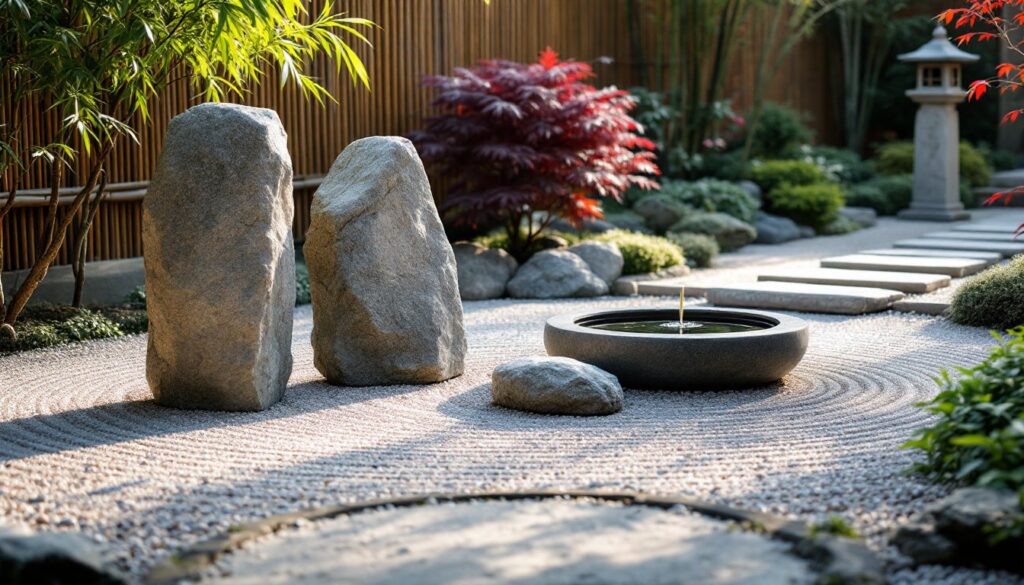
Rock groupings (ishi-gumi) follow odd-number rules: three, five, or seven stones per arrangement. Position one tall vertical stone as the anchor, a medium horizontal stone for balance, and a low stone to complete the group. Bury at least one-third of each stone to make it look embedded, not placed. This often means excavating 6-10 inches and backfilling with compacted soil.
Source stone locally when possible. Granite, basalt, and sandstone all work, but mixing types in the same arrangement looks chaotic. Plan on one ton of stone covering roughly 70-100 square feet when used as accent groupings, less if you’re building retaining elements.
If the site slopes, use stones to create subtle terracing rather than formal retaining walls. Stack flat stones dry (no mortar), tilting each course slightly into the hillside. For walls over 2 feet tall, consult local codes, many jurisdictions require engineered plans and permits for taller retaining structures.
Best Plants for an Authentic Japanese Garden
Focus on evergreens and foliage texture over flowering plants. Japanese gardens emphasize year-round structure, so the backbone should be conifers, broadleaf evergreens, and ornamental grasses that hold their shape across seasons.
Japanese maples (Acer palmatum) are the go-to specimen trees, but they’re zone-dependent (hardy in USDA zones 5-8). Choose dwarf cultivars like ‘Crimson Queen’ or ‘Sango Kaku’ if working with limited space, they max out at 6-10 feet and require minimal pruning. Plant them in partial shade in hot climates: full sun works in cooler zones. Water deeply during establishment (first two years), but they’re drought-tolerant once rooted.
Bamboo offers fast screening and authentic texture, but clumping varieties like Fargesia are essential unless you’re prepared to install root barriers. Running bamboo (Phyllostachys) spreads aggressively and can crack foundations, invade plumbing, and colonize neighboring yards. If using running bamboo, trench a 24-inch-deep HDPE root barrier around the planting area. Most homeowners should skip the hassle and plant clumping types or opt for black bamboo in containers.
Ground covers tie everything together. Mondo grass (Ophiopogon japonicus) and Japanese forest grass (Hakonechloa) work well in shade: both stay under 12 inches and spread slowly. For sunnier spots, use creeping thyme or Scotch moss between stepping stones. Traditional moss requires consistent moisture and shade, it’s not a set-it-and-forget-it option in dry or exposed sites.
Azaleas and rhododendrons provide seasonal color without overwhelming the palette. Prune them into rounded mounds (karikomi) after flowering. Keep pruning sessions light, removing more than one-third of growth stresses the plant. For homeowners interested in creating a relaxing seating area nearby, underplanting with low shrubs maintains sightlines without blocking views.
Creating Focal Points with Lanterns and Ornaments
Stone lanterns (tōrō) anchor visual zones and historically provided lighting along pathways. Sizes range from 2-foot yukimi-gata (snow-viewing lanterns) to 6-foot tachi-gata (pedestal lanterns). Position them near water features or at path intersections, never in the center of an open space. Traditional advice from garden design resources suggests placing lanterns where they’d naturally illuminate a functional area, not as standalone sculptures.
Set lanterns on a compacted gravel base or concrete pad. Larger lanterns (over 200 pounds) need a 4-inch concrete footer to prevent settling and tipping. Don’t level them perfectly, a slight lean adds aged character. Skip the temptation to wire them for electricity: LED solar options exist but look out of place. If lighting is needed, use separate low-voltage path lights.
Bamboo fencing and gates define boundaries without blocking views entirely. A 4-foot tall split bamboo fence (kennin-ji style) costs $30-50 per linear foot for materials if building it yourself. Sink 4×4 pressure-treated posts 24 inches deep in concrete, then wire or screw bamboo panels to a 2×4 frame. Stain or seal posts to prevent rot at ground level.
Deer scarers and bamboo accents work best as functional elements. A well-placed water dipper (hishaku) resting on a stone basin suggests use, not decoration. Overdoing ornaments, multiple lanterns, too many statues, excessive bamboo accents, turns a garden into a showroom. One or two carefully chosen pieces per visual zone is enough.
Avoid resin or fiberglass knock-offs. They weather poorly and crack in freeze-thaw cycles. Stone, cast concrete, and natural bamboo age gracefully. If the budget is tight, one authentic piece beats three cheap replicas.
Budget-Friendly DIY Japanese Garden Projects
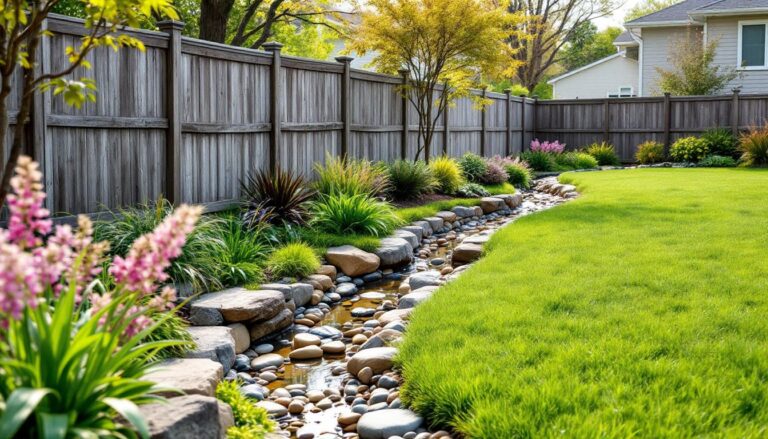
Dry stream beds (kare-sansui) replicate water flow using stone alone. Dig a shallow, meandering trench 12-18 inches wide and 4-6 inches deep. Line it with landscape fabric, then layer small river stones (1-3 inches) in the center and larger cobbles (4-8 inches) along the edges. The contrast in size mimics moving water. Total cost runs $100-200 for a 10-foot section, depending on stone prices in your area.
Build a simple bamboo fountain using a 5-gallon bucket, a small submersible pump (50 GPH, around $20-30), and lengths of bamboo. Sink the bucket in the ground, fill it with river rock to hide the reservoir, and run tubing through a vertical bamboo spout. The whole project takes an afternoon and costs under $75. Connect it to a backyard outdoor space with thoughtful placement near seating areas.
Raked gravel gardens (karesansui) require almost no skill but plenty of patience. Use decomposed granite or fine pea gravel (1/4-inch) spread 2-3 inches deep over landscape fabric. Rake parallel lines or concentric circles around stone groupings using a wide-toothed metal rake or bamboo leaf rake. Re-rake weekly to maintain patterns. It’s meditative work, not a chore.
DIY stone lanterns can be stacked from flat fieldstones if carving isn’t an option. Source stones from a landscape yard, 5-10 flat pieces in graduating sizes will cost $30-60. Stack them dry, using the largest as a base and working up to a capstone. It won’t replicate traditional lanterns, but it creates vertical interest without the cost of carved granite.
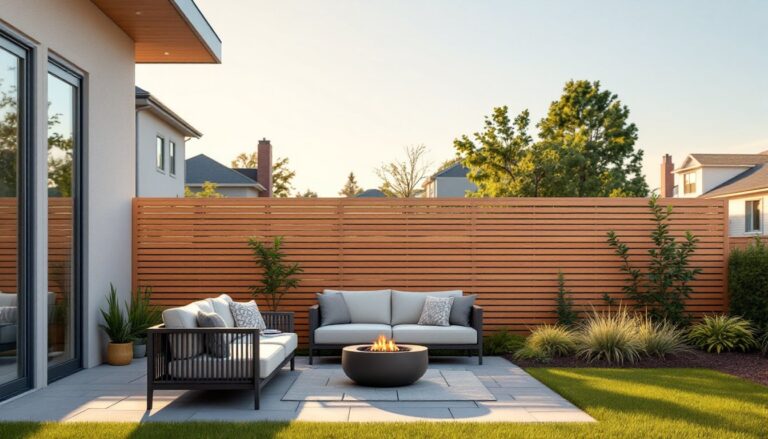
For backyard entertaining areas that transition into quiet spaces, a simple bamboo screen separates zones effectively. Buy 8-foot bamboo poles (6-10 pieces), sink them 18 inches into the ground, and wire thin bamboo slats horizontally at 6-inch intervals. Total cost: $40-70. The screen filters views without creating a solid wall, maintaining the open-yet-defined feel.
Create a moss garden bed in a shaded corner by removing existing turf, amending the soil with peat moss or compost, and transplanting patches of moss from elsewhere in the yard (or buying it in flats). Keep it damp for the first month. Moss establishes slowly but needs little care once rooted. This project costs almost nothing if sourcing moss locally, or $50-100 if purchasing commercially. Homeowners seeking inspiration for outdoor entertaining setups often find that quiet, moss-covered zones balance more active gathering spaces.
Conclusion
Japanese garden design rewards restraint and patience more than budget or square footage. The best projects start with a clear plan, honest assessment of maintenance commitment, and willingness to let materials weather naturally. Build in phases, starting with hardscape and structural plants, then adding ornaments and refinements over time. The result should feel intentional but not fussy, a space that invites quiet use, not endless upkeep.