In today’s fast-paced world, the minimalist kitchen emerges as a sanctuary of simplicity and functionality. With its clean lines and uncluttered surfaces, this design philosophy transforms cooking spaces into efficient havens that foster creativity and peace. Minimalism isn’t just a trend; it’s a lifestyle choice that resonates with those seeking balance and order in their homes.
Adopting a minimalist kitchen means prioritizing quality over quantity. By focusing on essential tools and thoughtful organization, individuals can create an environment that enhances their culinary experience. This article will explore the key elements of minimalist kitchen design, offering practical tips and inspiration for anyone looking to embrace this elegant approach to cooking and entertaining.
What Is a Minimalist Kitchen?
A minimalist kitchen embodies simplicity and functionality. It prioritizes clean lines and an uncluttered layout, emphasizing essential elements that enhance efficiency. This design philosophy promotes a serene atmosphere, appealing to individuals who appreciate order and tranquility in their cooking spaces.
Key characteristics of a minimalist kitchen include:
- Essential Tools: Focus on high-quality kitchen tools that serve multiple purposes. Examples include multi-function utensils, high-grade knives, and versatile cookware.
- Neutral Color Palette: Use soft, neutral tones to create a calming environment. Shades of white, gray, or beige contribute to an airy feel.
- Open Spaces: Encourage open layouts that allow for easy movement and accessibility. Minimalist kitchens often feature fewer obstacles and more streamlined surfaces.
- Thoughtful Organization: Arrange items thoughtfully to maintain a clean look. Drawers, cabinets, and open shelving should display only necessary items, fostering an organized aesthetic.
- Natural Elements: Incorporate natural materials like wood and stone to add warmth and texture. This integration enhances the overall ambiance without overwhelming the design.
Adopting a minimalist kitchen creates a space that is not only functional but also aesthetically pleasing, promoting a more enjoyable cooking and entertaining experience.
Benefits of a Minimalist Kitchen
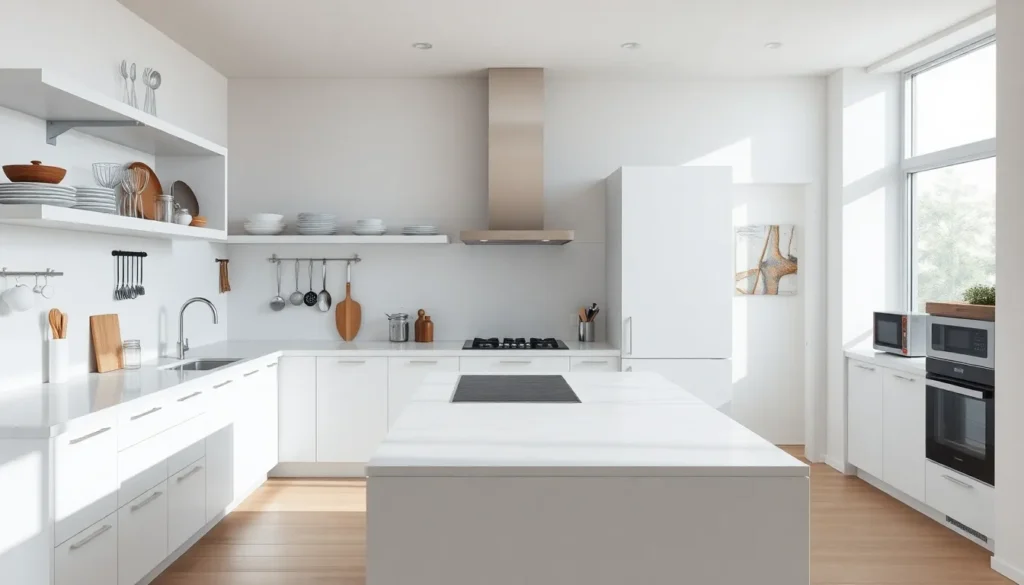
A minimalist kitchen offers numerous advantages, promoting a space that enhances functionality and serenity. The design prioritizes essential elements, creating an efficient environment ideal for cooking and entertaining.
Space Efficiency
Space efficiency is a hallmark of minimalist kitchen design. Maximal use of available space is achievable through streamlined layouts and clever organization. Open shelving or cabinets without embellishments provide easy access to utensils and appliances. Multi-functional furniture, including expandable tables or compact island units, saves room without sacrificing utility. Every inch serves a purpose, supporting a decluttered atmosphere that fosters productivity in meal preparation.
Ease of Maintenance
Ease of maintenance characterizes a minimalist kitchen. Fewer items lead to less clutter, simplifying cleaning routines. Smooth surfaces, such as quartz countertops and stainless-steel appliances, are easier to wipe down and maintain than intricate designs. Minimalist approaches to storage reduce the likelihood of accumulating unnecessary items, promoting an organized space that requires minimal upkeep. With intentional design choices, maintenance time decreases, allowing more time for cooking and entertaining.
Key Features of a Minimalist Kitchen
A minimalist kitchen prioritizes simplicity and functionality through carefully chosen elements. Understanding its key features can help create a serene and efficient cooking environment.
Simplified Design
Simplified design emphasizes clean lines and uncluttered surfaces. Furniture appears sleek and unobtrusive, often featuring built-in appliances that blend seamlessly into cabinetry. Open layouts encourage free movement and accessibility, enhancing both efficiency and comfort. Storage solutions often include hidden compartments or multi-functional items, maintaining an open feel while providing ample space for essential tools and utensils. Minimal decoration allows the design itself to shine, focusing attention on functionality over ornate appearance.
Color Palette
The color palette in a minimalist kitchen typically consists of neutral tones such as whites, grays, and beiges. These shades promote a calming atmosphere, creating a backdrop that enhances natural light. Accents in soft pastel colors can add warmth without overwhelming the space, supporting the objective of tranquility. Visual interest can arise from varying textures and materials rather than bold color contrasts, ensuring the kitchen maintains its harmonious and streamlined appearance. Incorporating touches of natural colors through materials like wood, stone, or greenery further enriches the environment while preserving minimalism.
Tips for Creating a Minimalist Kitchen
Creating a minimalist kitchen involves practical techniques aimed at simplifying the space. These strategies enhance both functionality and aesthetic appeal.
Decluttering Strategies
- Evaluate items regularly: Assess kitchen tools and appliances frequently, keeping only those used often.
- Implement a one-in, one-out rule: For every new item introduced, remove an existing one to maintain balance.
- Utilize storage solutions: Employ drawer organizers, baskets, and containers to keep items categorized and accessible.
- Embrace open shelving: Reduce cabinet clutter by displaying frequently used items on shelves, allowing for quick visibility and access.
- Limit decorative items: Choose a few standout pieces instead of numerous decorative elements to keep surfaces clean and appealing.
Choosing the Right Materials
- Select high-quality finishes: Opt for durable materials like stainless steel for appliances and quartz for countertops, ensuring longevity and ease of maintenance.
- Incorporate natural elements: Utilize wood, stone, or bamboo to add warmth while maintaining a sleek design.
- Choose neutral colors: Pick a palette featuring whites, grays, and beiges to encourage a serene atmosphere and enhance light.
- Mix textures thoughtfully: Integrate various materials, such as matte and glossy finishes, to add depth without overcrowding the visual space.
- Prioritize multi-functionality: Invest in items that serve dual purposes, such as storage ottomans or kitchen islands, optimizing space while reducing clutter.
Common Mistakes to Avoid
Avoiding common pitfalls enhances the minimalist kitchen experience. Here’s a list of mistakes to steer clear of:
- Overcomplicating Design: Choosing overly intricate designs clutter the visual space. Simple, clean lines promote a minimalist aesthetic.
- Neglecting Functionality: Prioritizing aesthetics over practicality hinders usability. Opt for multi-functional tools that enhance efficiency.
- Ignoring Storage Solutions: Disregarding thoughtful storage compromises organization. Utilize drawer organizers and open shelving to maintain clarity.
- Selecting Low-Quality Items: Using inexpensive, low-quality tools leads to frequent replacements. Invest in durable, high-quality kitchenware for longevity.
- Forgetting About Lighting: Underestimating the importance of lighting creates a dim ambiance. Incorporate natural light sources and layered artificial lighting for a bright atmosphere.
- Clinging to Excessive Items: Holding onto unnecessary kitchen items generates clutter. Regularly assess kitchen tools and apply a one-in, one-out rule to maintain simplicity.
- Inconsistent Color Palette: Mixing too many colors disrupts harmony. Stick to neutral tones with occasional soft accents to enhance calmness.
- Overlooking Maintenance Needs: Neglecting cleaning routines complicates upkeep. Choose smooth surfaces and easy-to-clean materials to simplify maintenance tasks.
- Rushing the Process: Hurrying through the minimalist transformation leads to overlooking essential details. Take time to evaluate and curate selections mindfully.
Focusing on these mistakes ensures a more successful minimalist kitchen design, promoting functionality and tranquility.
Embracing a minimalist kitchen can transform the cooking experience into one of ease and tranquility. By focusing on essential tools and thoughtful organization, individuals can create a space that not only looks stunning but also functions efficiently.
The balance of high-quality materials and a serene color palette fosters a calming atmosphere, making it a joy to spend time in the kitchen. With the right strategies for decluttering and design, anyone can achieve a minimalist aesthetic that enhances both functionality and style.
This approach encourages mindful living and allows for more time spent enjoying the culinary arts and entertaining loved ones. A minimalist kitchen isn’t just a design choice; it’s a lifestyle that promotes simplicity and joy in everyday cooking.