Table of Contents
ToggleCreating a small memorial garden in a <a href="https://thefolkremedy.com/backyard-wedding-setup/”>backyard offers a peaceful place to remember loved ones while adding meaningful beauty to outdoor space. Unlike large landscape projects, a memorial garden can fit into a corner, along a fence line, or even alongside existing beds. The project doesn’t require professional installation or specialized skills, just thoughtful planning, basic gardening tools, and a few weekends. Whether honoring a family member, beloved pet, or treasured friend, a well-designed memorial garden becomes a living tribute that evolves with the seasons.
Key Takeaways
- A small backyard memorial garden design requires minimal professional help and can fit into a 6×8-foot or 8×10-foot space with thoughtful planning and basic tools.
- Choose a location with 4-6 hours of sunlight for flowering perennials like roses and lavender, or shade-tolerant plants like hostas and ferns, while ensuring proper drainage and visibility from main living areas.
- Include hardscape elements such as edging, a gravel pathway, a stone bench, and a focal point like an engraved memorial marker to create structure and encourage quiet reflection.
- Select low-maintenance perennials suited to your USDA hardiness zone, spacing them according to mature width rather than current size to prevent overcrowding and disease.
- Personalize the space with weatherproofed items, solar lighting, or DIY engraved stepping stones that reflect the person or pet being remembered, prioritizing authenticity over expense.
- Maintain the garden year-round with seasonal tasks like mulch refresh, deadheading, weekly weeding, and consistent watering, requiring only 30 minutes of weekly care for a thriving memorial garden.
Planning Your Small Memorial Garden Space
Before buying plants or features, homeowners need to assess their yard conditions and define the garden’s boundaries. This upfront work prevents costly mistakes and ensures the space fits both the property and the intended tribute.
Choosing the Right Location
The ideal spot balances practical growing conditions with emotional significance. Look for an area that receives 4-6 hours of sunlight daily if planning to grow flowering perennials, most memorial-appropriate plants like roses, lavender, and daylilies need at least partial sun. Shadier spots work fine for hostas, ferns, and hellebores.
Check drainage by observing the area after a heavy rain. Standing water indicates poor drainage, which limits plant choices and may require amending soil with 2-3 inches of compost tilled 6-8 inches deep. For clay-heavy soil common in many regions, adding pea gravel to the base layer improves water movement.
Consider sightlines from windows, patios, or outdoor entertaining areas. A visible location allows year-round connection with the space. Proximity to utilities matters too, avoid digging near septic systems, buried electrical lines, or irrigation mains. Call 811 before breaking ground to have utilities marked.
Size the garden realistically. A 6×8-foot or 8×10-foot plot provides enough room for a small bench, a central memorial feature, and 8-12 plants without overwhelming maintenance. Mark boundaries with garden hoses or landscape paint to visualize the footprint before committing.
Essential Design Elements for a Peaceful Memorial Garden
A memorial garden needs structure beyond plants. Hardscape elements, seating, and focal points create a sense of permanence and reflection.
Start with edging to define the space. Options include:
- Steel or aluminum landscape edging (⅛-inch thick, 4-inch height): clean lines, won’t rot, lasts 20+ years
- Natural stone (flagstone or fieldstone): irregular, organic look, requires more labor to set level
- Brick pavers (standard 4×8-inch): classic appearance, easy to source, some frost heaving in cold climates
Edging should sit 1-2 inches above grade to contain mulch and prevent grass encroachment. Secure with landscape stakes every 3-4 feet.
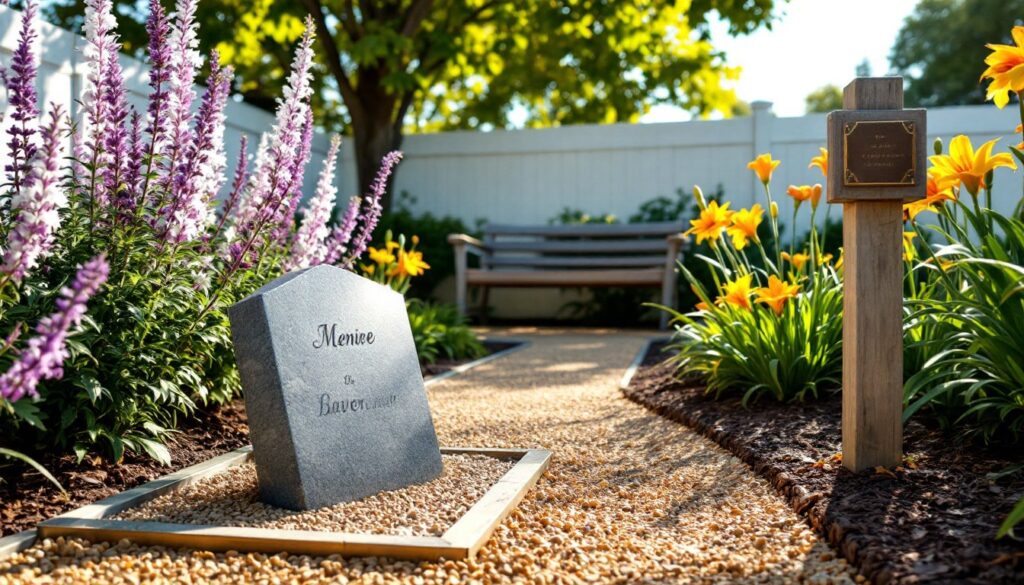
Pathways add accessibility and structure. For a small garden, a single 2-3 foot wide path of decomposed granite, pea gravel (⅜-inch size works best), or stepping stones leads to a central feature without crowding plants. Lay landscape fabric underneath to suppress weeds, skip the fabric if using stepping stones set in soil or sand.
Seating invites quiet time. A simple concrete or stone bench (18-inch seat height) fits most small layouts. Position it to face the memorial feature or a particularly meaningful plant. Wooden benches need treatment with exterior-grade stain or sealant every 2-3 years to prevent rot.
Focal points anchor the design. Common choices include engraved stones, birdbaths, small fountains (solar-powered units eliminate electrical work), or plaques mounted on low posts or stakes. Whatever the centerpiece, it should reflect the person or pet being remembered, personal details matter more than expensive materials.
Best Plants and Flowers for Small Memorial Gardens
Plant selection should balance symbolism, local climate, and maintenance tolerance. Perennials provide structure and return each year, while a few annuals add seasonal color.
Perennials for sun:
- Roses (hybrid tea, floribunda, or shrub types): classic memorial flower, needs 6+ hours sun, regular deadheading, and annual pruning
- Lavender (English or French varieties): fragrant, drought-tolerant once established, requires well-drained soil
- Daylilies (Hemerocallis): tough, low-maintenance, blooms for weeks, deer-resistant
- Salvia (perennial types like May Night): attracts pollinators, long bloom period, cut back in late fall
Perennials for shade:
- Hostas: varied foliage textures and colors, slug-prone in damp climates (use iron phosphate bait)
- Astilbe: feathery plumes in pink, white, or red, prefers consistent moisture
- Ferns (autumn, lady, or Japanese painted): elegant texture, needs regular water during establishment
Annuals for continuous color:
- Petunias, marigolds, or impatiens: fill gaps between young perennials, easy to swap seasonally
Choose plants from design ideas for small gardens that suit USDA hardiness zones (check the USDA Plant Hardiness Zone Map online for local zone). Buy gallon-size or larger perennials, smaller cells take longer to establish and may not survive first winter.
Space plants according to their mature width, not current size. Overcrowding invites disease and requires thinning later. For a 6×8 garden, plan for 6-10 perennials plus a few seasonal annuals.
Adding Personal Touches and Memorial Features
Personalization transforms a garden bed into a true memorial. These elements don’t need to be expensive or elaborate, authenticity matters more than cost.
Memorial markers and plaques:
- Engraved natural stone (granite, slate, or bluestone) lasts indefinitely and weathers gracefully
- Cast bronze or aluminum plaques mounted on wood or stone posts provide formal elegance
- DIY stamped concrete stepping stones (use letter stamps and concrete mix) offer a hands-on, budget-friendly option
For engraved stones, expect to pay $100-$300 depending on size and detail. Order from local monument companies or online retailers specializing in pet or garden memorials.
Personal objects:
- Wind chimes (select durable materials like powder-coated steel or anodized aluminum)
- Garden statues or sculptures that reflect hobbies or interests (a ceramic bird for a birdwatcher, a small lighthouse for a sailor)
- Repurposed items like an old watering can, vintage garden tool, or favorite mug planted with succulents
Weather-proof personal items by applying clear exterior polyurethane (2-3 coats) to wood or using outdoor Mod Podge on photos sealed in waterproof frames.
Lighting for evening reflection:
- Solar path lights (1-2 lumens per fixture) line walkways without trenching for electrical
- Low-voltage LED spotlights (12-volt systems) highlight focal points and require only a plug-in transformer
- String lights or lanterns add ambiance for backyard night gatherings near the space
Always check local codes before installing low-voltage landscape lighting, most jurisdictions allow DIY installation, but verify burial depth requirements for cables (typically 6 inches minimum).
Consider adding small memory garden elements like a simple water feature or a collection of favorite blooms to reinforce the tribute.
DIY Installation Tips for Your Memorial Garden
Proper installation ensures the garden thrives and requires minimal troubleshooting. Rushing this stage causes problems later.
Step 1: Clear and prep the site
- Remove existing grass using a flat spade or sod cutter (rental units cost $60-$90/day and save back strain for areas over 100 sq ft).
- Dig out sod to 2-3 inch depth, removing roots to prevent regrowth.
- Rake the area smooth and level. Use a 4-foot level or a straight 2×4 to check grade, slight slope away from structures prevents water pooling.
Step 2: Improve soil
- Test soil pH with a basic kit ($10-$15 at garden centers). Most ornamentals prefer pH 6.0-7.0.
- Spread 2-3 inches of compost or aged manure over the entire area.
- Till or turn soil to 6-8 inches deep using a garden fork or rototiller (rental: $50-$80/day).
- Let soil settle for a few days before planting if time allows.
Step 3: Install edging and pathways
- Dig a trench for edging 4-6 inches deep, keeping the top edge slightly above final mulch level.
- Secure edging with stakes every 3 feet, backfilling soil firmly against both sides.
- For gravel paths, excavate 2-3 inches deep, lay landscape fabric, then add gravel in thin layers, compacting lightly with a hand tamper.
Step 4: Plant
- Arrange plants (still in pots) in the bed to visualize spacing before digging.
- Dig holes 1.5-2 times the width of the root ball but no deeper than the container height.
- Gently loosen root balls, especially if pot-bound (roots circling tightly).
- Backfill with native soil (don’t amend individual holes, it can create drainage issues), firming gently to eliminate air pockets.
- Water thoroughly after planting, 1-2 gallons per plant to settle soil.
Step 5: Mulch
Apply 2-3 inches of shredded hardwood mulch or pine bark, keeping it 2-3 inches away from plant stems to prevent rot. Mulch conserves moisture, suppresses weeds, and gives a finished appearance. Replenish annually as it decomposes.
Safety notes: Wear gloves, safety glasses, and knee pads. Use ear protection with power equipment. Lift with legs, not back, when moving stone or bagged materials. Keep a first-aid kit nearby for minor cuts or blisters.
Maintaining Your Memorial Garden Year-Round
A memorial garden requires regular but not overwhelming care. Establishing a simple routine keeps the space looking respectful and inviting.
Spring tasks (March-May):
- Remove winter debris and cut back dead perennial foliage to 2-3 inches above ground.
- Refresh mulch layer to 2-3 inches total depth.
- Apply a balanced slow-release fertilizer (10-10-10 or 14-14-14) following label rates (typically 2-3 lbs per 100 sq ft).
- Divide overcrowded perennials like hostas or daylilies every 3-4 years.
Summer tasks (June-August):
- Water deeply once per week if rainfall is under 1 inch, use a rain gauge to track. Soaker hoses or drip irrigation reduce water waste.
- Deadhead spent blooms on roses, salvia, and daylilies to encourage reblooming.
- Hand-pull weeds weekly before they set seed. Mulch dramatically reduces this chore.
- Monitor for pests (aphids, Japanese beetles, slugs) and treat with insecticidal soap or neem oil for minor infestations. For serious issues, consult a local extension office before using stronger pesticides.
Fall tasks (September-November):
- Plant spring bulbs (tulips, daffodils, crocuses) in clusters for early color, 6-8 inches deep for tulips, 4-6 inches for smaller bulbs.
- Cut back perennials after first hard frost, or leave ornamental grasses and seed heads for winter interest and bird food.
- Add a 1-2 inch layer of compost as a soil-building top-dressing.
Winter tasks (December-February):
- Protect tender plants with burlap windbreaks if in exposed locations.
- Brush heavy snow off evergreen shrubs to prevent branch breakage.
- Check for frost heaving (plants pushed up by freeze-thaw cycles) and gently press back into soil when ground thaws.
Long-term care:
Expect perennials to reach mature size in 2-3 years. Replace short-lived plants like some lavender varieties every 5-7 years. Hardscape elements like stone and metal edging last decades with minimal care. Wooden features need re-staining every 2-3 years.
For a peaceful memory garden approach, consistency matters more than intensity, spending 30 minutes weekly beats sporadic marathon sessions.
Keep a simple garden journal noting bloom times, plant performance, and adjustments needed. Over time, the garden matures into a self-sustaining sanctuary that honors memory through living beauty.