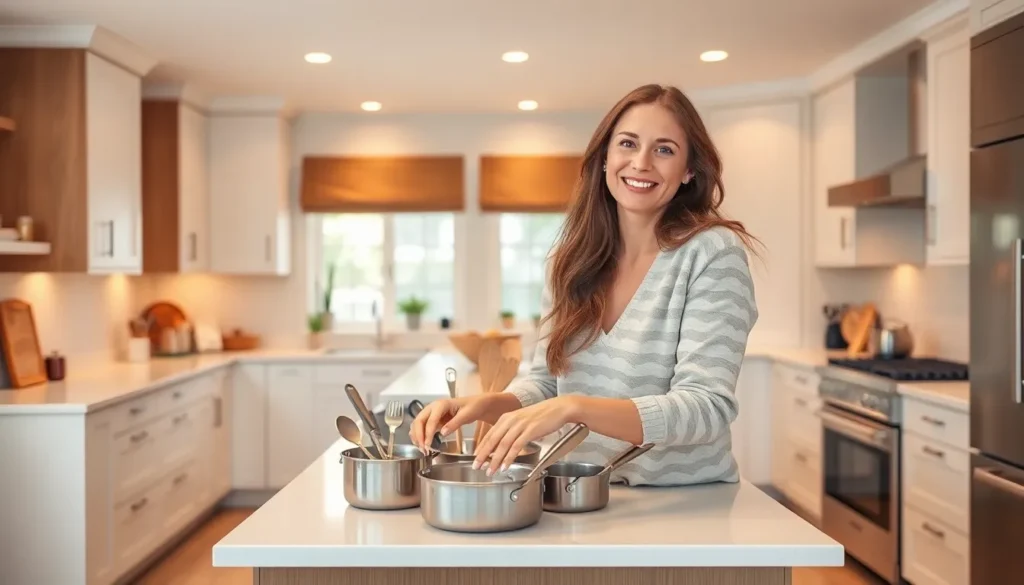
Planning a kitchen can feel overwhelming, but it doesn’t have to be. With the right approach, anyone can create a functional and stylish space that meets their cooking and entertaining needs. A well-thought-out kitchen not only enhances daily life but also adds value to a home.
This kitchen planning guide will walk through essential steps to design a space that reflects personal style while maximizing efficiency. From layout considerations to choosing the right appliances, each element plays a crucial role in crafting the perfect culinary environment. Whether you’re starting from scratch or renovating an existing kitchen, this guide provides the insights needed to turn a vision into reality.
Understanding Kitchen Planning
Effective kitchen planning ensures a seamless blend of functionality and aesthetics. Recognizing essential elements guides the design process, facilitating a space that meets cooking and entertaining needs.
Importance of a Kitchen Planning Guide
A kitchen planning guide offers clarity and structure during the design process. It streamlines decision-making, helps prioritize needs, and makes selections manageable, ultimately creating a cohesive vision.
- Defines goals – Establishes specific objectives for the kitchen space.
- Identifies budget – Outlines financial limitations to streamline choices.
- Increases efficiency – Improves workflow with strategically planned layouts.
- Enhances property value – Contributes value to the home through thoughtful design.
Key Components of Kitchen Design
Key components define the overall effectiveness of a kitchen design. Prioritizing these elements results in a functional and inviting environment.
- Layout – Determines traffic flow and work zones, including the classic work triangle between the fridge, stove, and sink.
- Storage – Essential for organization, including cabinets, pantries, and innovative storage solutions.
- Appliances – Selecting energy-efficient and user-friendly appliances maximizes utility.
- Lighting – Combines task, ambient, and accent lighting to enhance functionality and ambiance.
- Materials – Choosing durable, easy-to-maintain surfaces and finishes promotes long-term satisfaction.
- Style – Reflects personal taste, blending modern, traditional, or eclectic elements for a cohesive appearance.
Assessing Your Needs and Preferences

Assessing personal needs and preferences is crucial for successful kitchen planning. Understanding individual cooking styles and lifestyle influences helps shape a functional design that fits seamlessly into daily routines.
Identifying Your Cooking Style
Identifying one’s cooking style lays the foundation for an efficient kitchen layout. Consider the following aspects:
- Frequency of Cooking: How often is the kitchen used for meals? Daily home-cooked meals may require more prep space.
- Type of Cuisine: What type of cuisine is primarily prepared? Different cuisines necessitate various tools and equipment.
- Cooking Methods: Which methods are preferred? Baking, frying, or grilling may dictate appliance choices and placement.
- Social Cooking: Are meals often prepared for gatherings? Additional space for multiple cooks or guests enhances sociability.
Considering Your Lifestyle and Family Dynamics
Considering lifestyle and family dynamics significantly influences kitchen design. Key factors include:
- Family Size: Larger families may need more storage and seating options, ensuring adequate space for everyone.
- Activity Level: High-traffic households benefit from an open layout, allowing for smooth movement between spaces.
- Meal Preferences: Understanding dietary habits affects appliance selection, such as specialized cooking gear for health-focused diets.
- Entertaining Frequency: Regular entertaining demands optimized layouts, ensuring ease of interaction during meals.
By assessing both cooking style and lifestyle, homeowners can create a kitchen tailored to their needs and enhance overall usability.
Layout Options for Your Kitchen
Choosing the right layout enhances functionality and aesthetics in the kitchen space. Various layout options cater to different workflows and preferences.
Popular Kitchen Layouts
- Galley Layout
Galley kitchens feature two parallel countertops with a central walkway. This design maximizes space efficiency and is ideal for smaller areas.
- L-Shaped Layout
L-shaped kitchens utilize two walls forming an “L.” This layout provides ample counter space and encourages an open flow between the kitchen and adjacent rooms.
- U-Shaped Layout
U-shaped kitchens consist of three walls with counter space, offering significant storage and prep areas. This layout suits larger kitchens and families who cook frequently.
- Island Layout
Island kitchens incorporate a central island for additional prep and storage space. This design enhances social interaction and promotes multitasking during meal preparation.
- Peninsula Layout
Peninsula kitchens extend a countertop from a wall to create a barrier or additional seating area. This layout combines benefits of both L-shaped and island designs.
Pros and Cons of Each Layout
| Layout Type | Pros | Cons |
|---|---|---|
| Galley | Efficient, space-saving, easy to navigate | Limited workspace for multiple cooks |
| L-Shaped | Versatile, promotes movement, good for entertaining | Can feel closed off in smaller spaces |
| U-Shaped | Ample storage, ideal for multiple cooks | May require more space and can feel cramped |
| Island | Centerpiece for social gatherings, extra storage | Requires ample space, may limit movement if too large |
| Peninsula | Increases usable counter space, defines kitchen area | May obstruct flow, requires careful placement |
Selecting an appropriate layout remains crucial for creating an efficient kitchen that meets specific cooking and entertainment needs. Understanding the advantages and disadvantages of each layout type aids in making informed design decisions.
Choosing Materials and Finishes
Selecting the right materials and finishes significantly impacts the kitchen’s durability and aesthetic appeal. The choices made here contribute to both functionality and style, ensuring a cohesive design.
Countertop Options
Countertops serve as focal points in kitchen spaces, requiring careful consideration regarding material choice.
- Granite: Known for its durability and resistance to scratches and heat, granite countertops provide a classic, upscale look.
- Quartz: Engineered for consistent quality, quartz offers varied colors and patterns and it is non-porous, making it low-maintenance.
- Marble: Valued for its beauty, marble countertops are elegant but require more upkeep due to their susceptibility to stains and scratches.
- Laminate: An economical choice, laminate countertops come in numerous colors and patterns but may lack durability compared to stone surfaces.
- Butcher Block: Ideal for food preparation, butcher block adds warmth but requires regular maintenance to prevent damage.
Choosing a countertop requires balancing aesthetics, maintenance needs, and functional requirements.
Cabinet Styles and Colors
Cabinets represent a substantial portion of kitchen design, impacting both storage and visual coherence.
- Shaker Style: This timeless option features simple lines and a flat panel, ideal for both traditional and modern aesthetics.
- Flat-Panel (Slab): Popular in contemporary kitchens, flat-panel cabinets offer sleek designs and minimalistic appeal.
- Raised Panel: Often used in traditional styles, raised panel cabinets add depth and details, enhancing the visual interest.
- Colors: Neutral colors like white, gray, and beige are versatile, while bold colors like navy or forest green can serve as statement pieces. The finish—glossy or matte—also affects the kitchen’s overall atmosphere.
Choosing cabinet styles and colors shapes the kitchen’s character while ensuring ample storage and accessibility.
Incorporating Functionality and Storage
Efficient kitchen planning emphasizes functionality and storage solutions to enhance usability. A well-organized kitchen ensures that everything is easily accessible, maximizing both workflow and space.
Smart Storage Solutions
Smart storage solutions create an organized and clutter-free kitchen. Consider the following options:
- Pull-out shelves: Provide easy access to deep cabinets, preventing items from getting lost in the back.
- Corner cabinets: Utilize lazy Susans or pull-out racks to maximize often-neglected space.
- Vertical storage: Install wall-mounted shelves and hooks to free up counter space while storing items within reach.
- Multi-functional furniture: Use kitchen islands with built-in storage to combine prep space and storage effectively.
- Drawer dividers: Organize utensils, cutlery, and small gadgets within drawers, keeping everything neatly arranged.
By integrating these storage solutions, homeowners can create a streamlined kitchen that promotes efficiency.
Maximizing Space with Design
Maximizing space through design transforms a kitchen into a functional hub. Consider these design strategies:
- Open shelving: Encourage a lighter look and make frequently used items accessible.
- L-shaped and U-shaped layouts: Create efficient work triangles, ensuring cooking, prep, and cleaning areas are within easy reach.
- Adjustable shelving: Allow customization based on changing storage needs, accommodating various items without wasting space.
- Nooks and crannies: Incorporate built-ins or cabinetry that fits snugly against walls and in corners, utilizing every inch effectively.
- Sliding doors: Save space in smaller kitchens while offering access to pantries or laundry areas.
These design considerations enable homeowners to create an inviting and functional space that meets daily needs.
Lighting and Appliances
Lighting and appliances play crucial roles in enhancing both the functionality and aesthetic of a kitchen. Strategic lighting creates a comfortable atmosphere, while energy-efficient appliances improve daily convenience and reduce utility costs.
Importance of Lighting in the Kitchen
Effective lighting in the kitchen influences both ambience and functionality. Layered lighting is essential, consisting of ambient, task, and accent lighting. Ambient lighting offers overall illumination, while task lighting focuses on specific work areas, such as countertops and stovetops, improving visibility during food preparation and cooking. Accent lighting highlights design elements, creating visual interest and depth. Brightness levels should align with kitchen activities; brighter lights suit cooking areas, while softer lights provide warmth in dining spaces. Choosing LED fixtures enhances longevity and energy efficiency, reducing replacement frequency and utility bills.
Selecting Energy-Efficient Appliances
Selecting energy-efficient appliances minimizes electricity consumption while maintaining performance. Energy Star-rated appliances consume less energy, translating to lower utility costs and a reduced carbon footprint. Key appliances to consider include refrigerators, ovens, dishwashers, and microwaves. Smart technologies often enhance efficiency; for instance, induction cooktops provide faster cooking times and precise temperature control. Proper sizing is crucial; oversized appliances waste energy, while undersized ones may not meet needs effectively. Researching features and energy consumption ratings ensures informed decisions that balance functionality and sustainability, ultimately contributing to a well-designed kitchen.
Finalizing Your Kitchen Plan
Finalizing a kitchen plan requires careful consideration of budget and whether to engage professionals or take a DIY approach. Both factors significantly impact the project’s outcome.
Budgeting for Your Kitchen Renovation
Budgeting ensures the project remains feasible and meets financial constraints. Homeowners must identify total available funds and allocate costs across various aspects, including materials, appliances, labor, and permits. Typical kitchen renovation costs can range from $12,000 to $35,000, depending on the scope.
| Expense Category | Estimated Cost Range |
|---|---|
| Cabinets | $3,000 – $15,000 |
| Countertops | $1,000 – $5,000 |
| Appliances | $2,000 – $10,000 |
| Flooring | $1,500 – $4,500 |
| Lighting Fixtures | $200 – $1,500 |
| Labor | $4,000 – $10,000 |
Homeowners must prioritize essential elements over optional upgrades. Setting aside a contingency of 10% to 20% for unexpected costs ensures funding remains available for necessary adjustments.
Working with Professionals vs. DIY
Deciding between professionals and DIY affects both experience and expertise in kitchen planning. Working with a designer or contractor offers benefits like knowledge of current trends and resources for navigating permits. They can provide detailed design plans and help avoid common pitfalls.
DIY projects appeal to those seeking cost savings and personal involvement. However, homeowners should assess their skill levels realistically. For example, plumbing and electrical work typically require specialized expertise to ensure safety and code compliance. Tackling basic tasks, such as painting or installing backsplashes, is more accessible for homeowners.
By weighing the benefits of hiring professionals against the advantages of DIY, homeowners can choose the best path for their kitchen renovation, ensuring a successful outcome that reflects their vision and meets their needs.
Effective kitchen planning is a vital step in creating a space that is both functional and inviting. By thoughtfully considering layout, storage solutions, and materials, homeowners can design a kitchen that not only enhances daily routines but also reflects personal style. Prioritizing lighting and selecting energy-efficient appliances further elevates the kitchen experience while promoting sustainability.
As homeowners embark on this journey, assessing individual needs and preferences will ensure the final design aligns with their cooking and entertaining habits. Whether opting for a professional or taking a DIY approach, a well-structured plan will lead to a successful kitchen transformation that adds value and enjoyment to everyday life.